

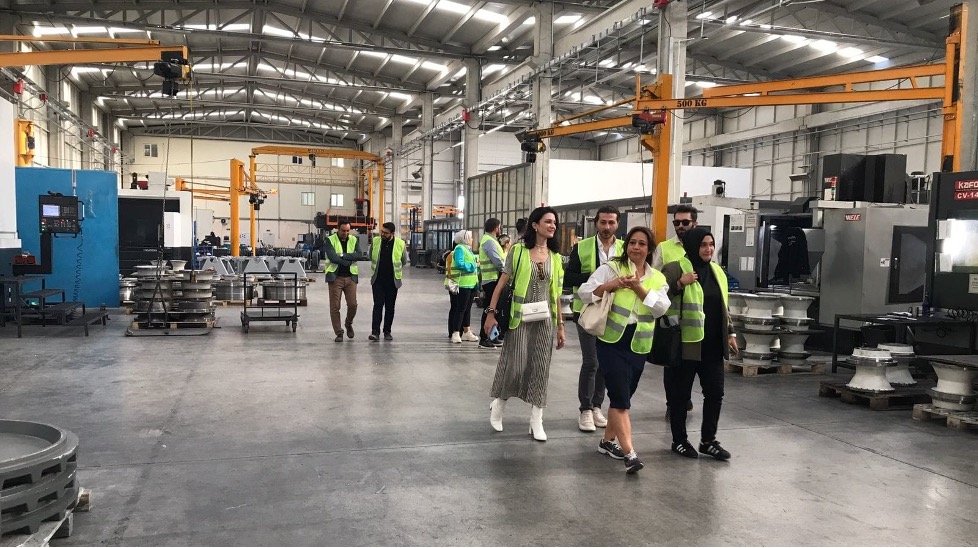
The experiences gained during the FOSTER I Project demonstrated that integrating Environmental and Social (E&S) considerations are not merely technical requirement, but a matter of institutional mindset and approach. Rather than simply explaining “what should be done,” our approach focused on making field practices visible and collectively building environmental and social awareness across the project ecosystem.
What was achieved under FOSTER I:
• A project portfolio of approximately 7,000 SMEs was managed.
• On-site monitoring and verification activities were carried out for around 1,000 SMEs within this portfolio.
Within the established E&S framework:
• SMEs were classified according to sector-based risk categories.
• A preliminary screening (exclusion) process was applied to ineligible activities.
• Higher-risk enterprises were subject to on-site monitoring visits.
This structured system ensured that:
The frequency, scope, and focus areas of monitoring for each SME were clearly defined in advance.
The Role of KOSGEB:
With the support of the Implementation Consultant, KOSGEB:
• Acted as the main institution monitoring the reflection of E&S practices in the field.
• Conducted on-site monitoring visits through project field officers.
• Maintained direct contact with SMEs.
• Ensured that identified issues were recorded.
What did These Efforts Achieve?
• A common working language was established for KOSGEB and field teams.
• A significant number of the SMEs began for the first time, to systematically address topics such as environmental management, occupational health and safety, and workers’ rights.
Challenges Encountered
• Workload imbalances occurred across different project provinces.
• Due to the early start of monitoring, there was a loss of effort for SMEs that later dropped out of the project.
• Data stored across multiple locations made tracking difficult.
• The voluntary nature of actions plans limited progress in some SMEs.
These provided valuable guidance for designing a stronger and more efficient structure for the new phase.
What Changes under (FOSTER II):
In the new phase, our objective is clear:
To carry out the same core activities in a more streamlined, structured, and sustainable manner. To ensure the effective implementation of this system, training regarding E&S monitorings was provided to KOSGEB SME Experts and Local Project Coordinators to encourage active E&S participation inthe field.
Key Improvements:
1- Revised Monitoring timeline
Monitoring activities will begin after SMEs receive their initial support.
2- Simplified Data management
E&S information will be managed through a single and centralised system
3- Stronger Training and guidance
SMEs will be supported with:
• Short guidelines,
• Visual checklists,
• Sector specific handbooks
4- Incentivizing Compliance
Good practices will not only be recommended, but also supported through incentive mechanisms
Environmentally and socially responsible practices enhance project quality, strengthen institutional credibility and generate long-term benefits for all stakeholders.

|

|

|